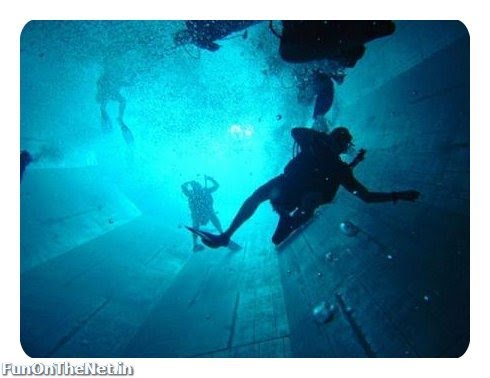
Night Diving


If you have not yet experienced the ocean at night, we highly recommend it.  You can see creatures and behaviors not normally seen during the day.  The whole experience is fantastic.  There are some special considerations for diving at night, including equipment selection,  buddy proximity, and navigation techniques.   However, everyone can enjoy these special dives with a little attention to proper preparation.

If you have not yet experienced the ocean at night, we highly recommend it.  You can see creatures and behaviors not normally seen during the day.  The whole experience is fantastic.  There are some special considerations for diving at night, including equipment selection,  buddy proximity, and navigation techniques.   However, everyone can enjoy these special dives with a little attention to proper preparation.Firstt, have a tank light.  That’s a light you attach to your tank to make yourself more visible.  These can be any color. Some flash, some look like luminous pencils. Anything will work, but it needs to be battery powered.   Those sticks are an absolute terror on the environment above and below water.  In addition, you need to have at least two dive lights with you.  Have two good lights, and check the power level of each before the dive.  Debbie and I make certain to each have two functioning and well-charged lights on every night dive, and even that precaution is  no guarantee.  On a night dive off of Statia a few years back we entered with two lights apiece. We checked them all, they had new batteries.  Within ten minutes, for whatever reason, we were down to one.  Redundancy is key.  So is having quality equip. Be aware of other divers and control the beam of your dive lights.  Don’t shine your light in other people’s eyes.  Work out signals with your light- circle it for “ok”, side to side for distress, and other signals.  But keep the light beams out or other people’s field of vision.
On every night dive ( in fact on every dive)  you should  have a compass,  know how to use it,  and  use it.  Let’s face it, in good visibility with plenty of light, navigation is usually not an issue.  At night it is always an issue.  Knowing where you are is important to your safety and is a courtesy to those who will have to come and find you in the dark if you get lost.  If you and your buddy  are not comfortable on your own on a night dive, then join up with someone with more experience and better skills, and  stay very close to them.  Many resorts offer guided night dives for those new to this kind of diving.             If you are in a group, stay with the group and close to the group.  Always.  If there is a designated leader, and there should be, follow the leader.   Buddy proximity and group proximity are very important on night dives.  Don’t wander off.
Night diving from shore suggests using either a shore party with a signaling device for indicating your point of entry or exit, or if everyone on the outing in getting in the water, placement of a distinctive light or beacon to reference as point of entry and exit.  When diving from a boat, suspension of a strobe of other light fulfills the same function.   In fact, I have been on night dives in which a sequence of lights or beacons have been placed to mark the “trail home,”  though that is a bit unusual.
Remember your dive flag when diving at night, and illuminate it with a small light.  Daytime diving and safety rules apply at night, including dive flag rules.
Let people who are  not on your dive know where you are diving, when you are diving, and when you will be back. This is an important rule for all dives, but especially important for night dives.  If you are diving from shore, make sure someone knows where you are going, when you are diving, and when you expect to be back.  The same thing holds true if you are diving from a live aboard or private boat.  Check out properly. Tell people when you leave and tell them when you get back.  Most people are pretty good about the first part of the rule, but don’t always remember to report back when the dive is done.  Be sure after you return from your night dive that you tell people you are back.  Tell all the people you told about the dive before it began. Those people who took the time to note your absence are entitled to know when they are off duty.  It is not fair for them to be searching frantically for you only to find that you are snug in your boat cabin or decided to stop off on the way home for a drink or snack.
If you get the chance, try diving at night.  If you want a little more training before trying it, consider a night dive specialty class through your local dive center.  But don’t be afraid of the dark- there is a whole new world of wonder in the sea after the sun goes down.


- See more at: http://scubadiverlife.com/2013/06/18/night-diving-101/#sthash.2UDcOQGc.dpuf


Vertigo on ascent, why?

Accident Assessment: A 38-year-old male diver was participating in a recreational dive. The profile was 58 fsw(approx 27m) for 40 minutes. This individual experienced transient problems with equalization of his middle ear during descent. During his ascent he developed acute vertigo, sense of fullness in one ear, nausea and slight disorientation at around 20 fsw (7m). He managed to reach a buoy line at 15 fsw(5m) and hold on. Within the 3 minute safety stop all symptoms completely resolved and he returned safely to the surface. What do you suspect and why?

  Response: This was most likely alternobaric vertigo related to a reverse block. Typically equalization during ascent is passive with the air venting from the middle ear easily. If for some reason the expanding air vents more easily or quickly from one ear than the other, the difference in pressure between the two middle ears can cause the symptoms. It is possible that the transient difficulty with equalization during descent may have contributed to the reverse block. If you experience a reverse block, especially if the more serious symptoms manifest, stop your ascent, descend a few feet and move the jaw to help facilitate equalization.

Diving and getting caught in a vortex..check out the bubble trail.(Video ).

A very dicey situation to be caught in.It can be seen that the bubble trails are being pulled sideways i.e. horizontally rather than up. This happened at Roca Partida, Revillagigedo, A potentially dangerous situation for the less experienced. The vortex current was flowing horizontally, at 25 metres depth, Divers can learn a lot just by watching these..

divers


Alcohol and scuba diving.! Experts have different opinions!

Don't drink before , in between and immediately after diving!

No booze,No Strenous activity after diving!

Following  is a response to the article above after posting the discussion in forums!


What the experts say! 
                      On drinking alcohol  and scuba diving.
Mainly it is a bad idea but there is another school of thought!

You would have thought that this subject will have a general consensus among the experts in Dive medicines as a Bad Idea. But interestingly and contradictorily, there are detractors among the specialist, citing strong evidence to support their contentions.
 Experts on diving medicine don't agree totally , and have different opinions on the effects of alcohol and diving.

 DAN's (divers alert network) 

 Simply put, alcohol and diving are not compatible. Alcohol causes depression of the central nervous system, which impairs judgment and reduces reaction time and coordination. Often the individual is not even aware of the degree of impairment. A review of more than 15 studies on the effects of alcohol on performance found that alcohol was involved in roughly 50 percent of all accidents in people of drinking age. In Diving and Subaquatic Medicine (Edmonds C, et al., 2002), the authors report that alcohol is associated with up to 80 percent of all drownings in adult males. It takes time for alcohol to be metabolized and its effects to wear off. M.W. Perrine and colleagues studied a group of experienced divers and the impact of alcohol consumption on their performance.. The study went on to state that  situational awareness and protective inhibitions may be reduced. Recent alcohol intake (along with seasickness, traveler's diarrhea, excessive sweating, diuretic medications and air travel) is a potential cause of dehydration in divers. Alcohol ingestion may also enhance the effects of nitrogen narcosis. Elevated BAC, dehydration and nitrogen narcosis together may result in otherwise preventable accidents due to decreased problem-solving ability. Many divers appreciate a cold beer, but drinking and diving can turn a safe activity into a unwanted bad experience for both the diver and all those impacted by a rescue or fatality. Think twice before combining alcohol and diving

 
Scuba docs has this to say :
                                      Beer While Diving? 

Some divers insist that drinking beer before, during and after their dives has no risk if consumption is not excessive. Is there any danger in drinking alcoholic beverages and diving? The short answer is that by drinking alcohol before and during diving trips increases the risks not only to themselves but their dive buddies!
 Blood Alcohol Concentration (BAC) Research has shown that there is a definite reduction in the ability of the individual to process information, particularly in tasks that require undivided attention for many hours after the blood alcohol level has reached 0.0%. This means that the risk for injury of a hungover diver is increased significantly, particularly if high BAC levels were reached during the drinking episode. The AMA upper limit of the BAC for driving a vehicle in the US is 0.05%. Surely diving with any alcohol on board would be foolish, considering the alien environment (water) and the complex skills required to follow no deco procedures.
 Alcohol Impairment 
 All of the following behavioral components required for safe diving are diminished when alcohol is on board or has been on board in the prior 24 hours: Reaction time Visual tracking performance Concentrated attention Ability to process information in divided attention tasks Perception (Judgment) The execution of psychomotor tasks. The individual who has alcohol onboard may not feel impaired or even appear impaired to the observer but definitely is impaired and this is persistent for extended periods of time. The use of alcohol, even in moderate doses, clearly carries a self-destructive aspect of behavior and leads to higher probabilities for serious accidents. Alcohol causes dehydration (a diuretic) In addition to these dangers is the definite danger of alcohol-produced dehydration. Dehydration is considered to be one of the prime causes of decompression illness. Alcohol in any form has a direct effect on the kidneys, causing an obligatory loss of body fluids. If your drinking buddy is an intelligent diver, surely he will understand that this is not preaching- a cool beer is appreciated by the author-but by drinking and diving he can turn a safe sport into a nightmare for himself and his family. I'm sure that when he considers that he is also endangering his buddy that he will think twice before drinking alcohol before and while diving. There have been recent discussions in scuba magazines, chat rooms and scuba forums that it's OK to drink beer between dives during a surface interval. Some divers insist that drinking beer before, during and after their dives is acceptable citing personal experiences and maintaning that nothing untoward has ever happened.
 So, Is there any danger in drinking alcoholic beverages before , in between and immedaitely after diving? General consensus among the experts seem to indicate that it is a bad idea and the risks of DCS is increased by doing so! Dr. Glen Egstrom, PhD has stated the problem succinctly: He made personal review of over 150 studies on the effects of alcohol on performance has resulted in the following observations:
 1. Ingestion of even small amounts of alcohol does not improve performance: to the contrary it degrades performance
 2. While there are variables that can speed up or delay the onset of the effects of alcohol, they are minor issues which do not overcome the decrements to the central and peripheral nervous system.
 3. Alcohol can be cleared from the blood at a predictable rate. Generally on the order of .015% BAC per hour. This does not necessarily mean that the decrements in performance have been completely eliminated in that time.
 4. Alcohol is a depressant drug that slows certain body functions by depressing the entire central nervous system. Effects are noticeable after one drink.
 5. The effects are mood elevation, mild euphoria, a sense of well being, slight dizziness and some impairment of judgment, self control, inhibitions and memory.
 6. Increases in reaction time and decreases in coordination follow the dose/response curve quite well.
 7. Alcohol is involved in 50% +/- of all accidents involving persons of drinking age.
 8. The deleterious effects of alcohol on performance are consistently underestimated by persons who have been drinking alcohol.
 9. Divided attention tasks are found to be affected by alcohol to a greater degree than those tasks with single focus of concentration, i.e. a task such as a head-first dive into shallow water, with many interrelated decisions necessary to a successful dive, will be impacted to a greater degree than lifting a heavy weight.
       ( click the titles to link to the full articles)


Detractors opinions below:

 Diving research"Alcohol and DCI"

But interestingly, there are many experts in the field of dive medicine who actually disagrees with the general consensus that alcohol and diving is just bad news.
 Quote from an article " in a study of 440 divers, incidence of DCS in those who frequently drank wine was lower than in those who did not. Recent research on mortality from heart disease has suggested that drinking red wine may protect against heart disease by way of vasodilation. It may be, then, that such vasodilation may improve the movement of nitrogen bubbles through the circulatory system, leading to faster elimination of small bubbles. " unquote. (brief extract from the article suggesting among the experts that not enough data to definitively suggest alcohol and diving is dangerous.)
 1. there are no data showing an association between alcohol use and DCS risk;
2. everybody thinks there are; 3. there are theoretical reasons to suspect a link, but these remain unstudied and unproven.. Although conventional wisdom holds that alcohol use, either before or after diving, contributes to the development of DCS, there are no data supporting this contention.

Current policy Alcohol use is described as a risk factor for DCS in the dive training manuals of all the major diving certification agencies as well as numerous books and articles on diving and DCS. DAN cautions against drinking before or after diving, citing alcohol's effect on judgment and the dehydrating effects of alcohol, which may inhibit nitrogen off-gassing The training manual of the Professional Association of Dive Instructors (PADI) instructs divers to avoid alcohol before, between, and at least two hours after diving, stating emphatically that alcohol "causes dilation (enlarging) of the blood capillaries, increasing circulation. Drinking alcohol prior to a dive will cause increased nitrogen absorption during a dive. Drinking alcohol after a dive will release nitrogen much too quickly, possibly contributing to bubble formation" Books on deep diving similarly caution against drinking, often giving no particular reason (Gilliam & Von Maier, 1992; Lippmann, 1992). Yet,in a later article [Gilliam, 1994], criticized some of the conventional wisdom of diving, including the rule "you can't dive if you have a beer with lunch." Gilliam noted that alcohol has the same dehydrating effect as caffeinated beverages, and that the effect of moderate consumption of these beverages is of little consequence. He concluded that "a few sacred cows continue to moo long after their milk ran dry"
  Link to the full article at Diving research"Alcohol and DCI"


spanish dancer nudibranch/violent sex of slugs


Sensuous dance of a spanish dancer nudibranch in front of a mirror


Violent sex of the underwater hermaphrodite aka the  flatworm


Be the best freelance writer you can be

If  you are thinking of becoming a writer but you are not sure whether you have what it takes, well don't  doubt your self nor your ability anymore. Many do not realise that writing online is not as daunting as it seems. Of course proficiency in English is a factor but if you have that already, well you can be a writer online.
There are many dimensions to being a writer,it is not just about being creative ,there is article rewriting , writing reviews or opinions , reports etc. Many avenues that enables  earning income as a online writer working from home, Practice makes perfect, There are possibilities even for those who have never contributed a single word to anywhere. It is jut knowing how to start. Click this link to get the advice you need to start as a writer about whatever and see  how far you can go .

Get started as a online freelance writer ,Just click this text link

Or if you think you aren't ready yet to be a writer online, then sign up with the real freelancer site meaning you can have a pick of whatever job you think you are able to do. Many of the jobs posted at freelancer do not require language skills , and just need a good head on your shoulders and a desire and willingness to work with effort. Then you will definitely be able to earn money from this freelancer site below, Thousands of jobs available in every category imaginable or if you are looking for help with any job or project,you can also post it at freelancer and wait for the applications for you to screen and select. This site is ideal for job seekers wishing to work from home or employers outsourcing jobs to the online workforce. Or if you happen to know of people who would like to work from home , refer them to the site and you can generate a passive commission for that as well . To get started just Sign up for an account and just browse through the features. Its totally free.! Even when you start earning , it is still free till you get paid by your employer, then you just give freelancer their commission...deducted .. Get your friends to sign up after you have an account and start earning from doing nothing
Start earning online choosing the job  you think you can do.
And if you need help bidding for jobs, email me seabryan@gmail.com and i ll give you a few tips and  help you bid for the jobs you re interested in.

   Click here to go to freelancer site.. -->

x

Signs of swimmer in distress/near drowning


This is a very important video to watch - for ANYONE who is going near water. Particularly important for scuba divers as this contradicts what we are taught in the PADI Rescue course. Panicking people splash at the surface, but drowning people are often silent ..


A person may drown and nobody may notice the signs of trouble until it is to late .
Usually most people expect a swimmer may be in some sort of trouble and struggling in the water accompanied by yelling or crying out for help. But as the video shows ,that is not always the case, swimmers in difficulty may be struggling in silence just next to any person who doesn't even realise that the person needs help till it is too late and without a whimper  just slipped under water. This type of situations happens more frequently than we would like but if we can learn to recognize the signs of distress,it may mean the difference between life and death. Deep water whether in a swimming pool or ocean is an  environment not to be taken for granted. Many things can happen....


The Instinctive Drowning Response -- so named by Francesco A. Pia, Ph.D., is what people do to avoid actual or perceived suffocation in the water. And it does not look like most people expect. There is very little splashing, no waving, and no yelling or calls for help of any kind. To get an idea of just how quiet and undramatic from the surface drowning can be, consider this: It is the number two cause of accidental death in children, age 15 and under (just behind vehicle accidents) -- of the approximately 750 children who will drown next year, about 375 of them will do so within 25 yards of a parent or other adult. In ten percent of those drownings, the adult will actually watch them do it, having no idea it is happening (source: CDC). Drowning does not look like drowning -- Dr. Pia, in an article in the Coast Guard's On Scene Magazine, described the instinctive drowning response like this:

1. Except in rare circumstances, drowning people are physiologically unable to call out for help. The respiratory system was designed for breathing. Speech is the secondary or overlaid function. Breathing must be fulfilled, before speech occurs.

2. Drowning people's mouths alternately sink below and reappear above the surface of the water. The mouths of drowning people are not above the surface of the water long enough for them to exhale, inhale, and call out for help. When the drowning people's mouths are above the surface, they exhale and inhale quickly as their mouths start to sink below the surface of the water.

3. Drowning people cannot wave for help. Nature instinctively forces them to extend their arms laterally and press down on the water's surface. Pressing down on the surface of the water, permits drowning people to leverage their bodies so they can lift their mouths out of the water to breathe.

4. Throughout the Instinctive Drowning Response, drowning people cannot voluntarily control their arm movements. Physiologically, drowning people who are struggling on the surface of the water cannot stop drowning and perform voluntary movements such as waving for help, moving toward a rescuer, or reaching out for a piece of rescue equipment.

5. From beginning to end of the Instinctive Drowning Response people's bodies remain upright in the water, with no evidence of a supporting kick. Unless rescued by a trained lifeguard, these drowning people can only struggle on the surface of the water from 20 to 60 seconds before submersion occurs.


This doesn't mean that a person that is yelling for help and thrashing isn't in real trouble -- they are experiencing aquatic distress. Not always present before the instinctive drowning response, aquatic distress doesn't last long -- but unlike true drowning, these victims can still assist in their own rescue. They can grab lifelines, throw rings, etc.

Look for these other signs of drowning when persons are in the water:

- Head low in the water, mouth at water level
- Head tilted back with mouth open
- Eyes glassy and empty, unable to focus
- Eyes closed
- Hair over forehead or eyes
- Not using legs -- Vertical
- Hyperventilating or gasping
- Trying to swim in a particular direction but not making headway
- Trying to roll over on the back
- Appear to be climbing an invisible ladder.

So if a crew member falls overboard and everything looks OK -- don't be too sure. Sometimes the most common indication that someone is drowning is that they don't look like they're drowning. They may just look like they are treading water and looking up at the deck. One way to be sure? Ask them, "Are you alright?" If they can answer at all -- they probably are. If they return a blank stare, you may have less than 30 seconds to get to them. And parents -- children playing in the water make noise. When they get quiet, you get to them and find out why.

 Share this information above  with your friends ,you never know , it may help prevent an unwanted incident 


Wanna get stoned while you are scuba diving underwater.Well, it is called nitrogen narcosis!!

Why is it that entry level scuba learners have a depth restriction of 18 metres.. Many gung ho diehard would be divers who don't have the knowledge about  nitrogen narcosis may think it is a bravery issue to go dive deep,where it is actually a knowledge and control thing mentally.18 m and above is usually not deep enough for the water pressure to effect the onset of getting nitrogen narcosis and beginner divers may learn to gradually control their mindset as they increase their total underwater exposure building up bottom time.
   
Only through experience can an individual be more calm and controlled.It doesnt really matter how gutsy you may be,but if you are a total newbie scuba diver, you may not know what narcosis might feel like and hence not be able to anticipate its onset or recognise the symptoms if the diver suddenly ventures in to deep water and risk losing control or downright losing it , like ..getting totally stoned , zonked , smashed , and behaving foolhardily. All is fine and good if the diver in question is in control of their faculties but then if not,well, there is always drowning underwater to contend with.

 Getting narc is a funny thing . Personally i have witnessed few incidents of divers getting nitrogen narcosis on my shift as a dive instructor chaperoning or supervising deep dives with supposed experienced divers who were supposed to be trained for dives deeper than 25 m.

 I have seen narc divers with my own eyes while training beginner divers on an advanced diver course and bringing them to a depth of 30 metres,linger few minutes then give them some simple mental exercises to test their coordination and also to see if they are susceptible to narcosis at depth..
   
 There was a guy who after few minutes in a stationary kneeling position on a sandy bottom at 30 m,as i was about to play a fingers game with him, i noticed a blank stare through his dive mask. He was just staring at the surrounding environment and you can pretty much tell,he wasn't totally there!  Inquisitive little wrasse fishes were swimming close to his face mask,and then the next thing you know,he suddenly on a whim, decide to feed the little fishes......with air bubbles.....from the regulator ...that he took out from his mouth that which he was getting his air supply from...and started depressing the purge button so that the air bubbles will make the fishes happy with a bubble bath. To top it off , i suddenly could hear laughing coming from him , sounded like laughing at first, then it seemed to sound more like coughing or worst .choking. All in a matter of 10-15 seconds.

 Yup narcosis rears its head. And another one bites the dust.Rephrase ,another chokes on seawater.Had to force the regulator back to his mouth ,sealing the mouthpiece with my palm and his lips depressing the purge air button (at least he isnt merely sucking in water when he gags,coz of the continuous air flow) and immediately start ascending slowly to a shallower depth. At about 12 m ,he snaps out of it .And on the boat, he said he could vaguely remember what happened but sheepishly had an attitude of  "devil made him do it" kind of excuse.
         Which is cool by me.
   
 At least to me it was a situation where i had a bit of control over since i was physically within touching distance with him at all times. Meaning there was a risk but it was minimized to the fullest.

 Better odds than another diver, who had the deep diver certification,showed the cert to me verifying that he had gone through deep diver training and a advanced diver course meaning that he could handle himself underwater in deep ,strenous or challenging conditions. Requested that he be guided to a dive site popular among advanced divers because of the beauty but at the same time known to be challenging as well during certain periods .
 Also a deep dive site that maximizes at 70 metres to the bottom . Usually,i will guide divers straight down to level off at 30m where the most interesting stuff is and progressively go shallower till dive ends at about 13m top of the reef.
 This 'advanced diver' with a group of 4 more jumped in with me and started to follow me down to 30 m as planned.There was a bit of a surface current and reef was in open water so i had briefed them that soon as we jumped in we had to descend as quick as we can to the reef and take cover from the current ,or we risk missing the reef swept off course by the current. Jump in swim straight down,don't linger on the surface,regroup underwater at the top of the reef and descend deeper to spiral around the reef as we tour the dive site.
 
 There was good visibility of approx 20 m. Every diver managed to dothe first part, which also kind of loosened me slightly,because i thought that if they could do that individually,then there shouldn't be any problems since the tough part is over, the rest is easygoing ,just touring dive site. Every 10 mins or so i will look back as we
swam along giving OK signals making sure all responds with same . 20m paused. Was in front of group.Looked back,divers in buddy formation. gliding towards me,the advanced diver at that point had both his hands on his depth and air gages and compass, he was looking at it . and i thought , " good, a careful diver ,monitoring his profile at all times underwater".

 Banged my tank to signal to elicit a response from him that all is good at 23 m. Got an OK,so continued deeper,looked back again at 25m ,Okayed everyone, all responded except for the guy who had both hands in front holding  his gages..Assumed that he is on top of things and didn't hear my clanging of tank, arrived at a landmark at 25m where we had to turn right. so looked back at the divers to signal them to follow ,all responded again except for the guy who seemed to be too preoccupied with his depth gage and air gage coz it was the only thing he was looking at.

 Felt at that point that i may need to be on a "just in case" state of mind, so swam to him, pinched him on his arm and asked if he was OK. The guy just seemed to snap out of some mind state,but he could respond with a OK. so i motioned for him to follow me ,and he OKayed and even nodded. So i relaxed and started to swim to position myself in the front of the group to guide them .
   Looked back again , all seemed smooth in a tight group.
Arrived at 30m, another landmark for course diversion ,so paused to wait for everyone before changing course .
 
And right in front of my eyes ,i could see that as the other divers were following me in changing course,that guy was going straight, down , not looking at anything..and would you know it , he still was grabbing on to his gages seemed to be staring at it  , same unchanged position but worst yet he wasn't levelling off but was swimming straight down.Everyone else was following me making a right turn at the landmark except for him who was not levelling off at all but just swimming and swimming, in one general direction , down deeper.  
   
 Furiously banged on my scuba tank to get his attention but all i see was a figure with both hands in front firmly  clamped on to his depth and pressure gage.
        Well,by then ,signaled the other divers to go shallower and stay together while i chased the stray. Had to fin so hard to go after him ,by the time i caught up with him,i was almost out of breath ,risking getting narc myself ,Actually i could feel the effects of the narcosis on my person,luckily i knew enough to fight it and stay alert as best as i can and not let it get to me, by that time , he had managed to swim down to 50 m from 30 and god forbid if i had not gone after him,how deep he would have gone on .!
 
  And he still wanted to go on a straight course deeper down. Had to grab him by his arm when i caught up with him,, jerked him a little, but this time i am not letting go of my hold. Had to literally drag him by his arm to follow me back up shallower. Glad the other divers were really cool and knew to stay in a group and waited at the shallow part of the reef.
  And of course, symptoms of the narc diver just evaporated as we ascended to shallows.
            I can think of many instances witnessing divers getting narc. point being, nitrogen narcosis is not to be taken lightly.
     
 Divers get killed not by nitrogen narcosis but by the effects of it while they are at depth. The silly things it causes a diver to do, one when in severe narcosis, just loses it and commits life threatening stupidity.

Even the best of divers do get narcosis, it is how the diver controls his state of mind by recognising the symptoms and making a super effort to stay alert and not let it take control.


The most poisonous octopus has venom that can kill a man in 10 secs with just a tiny bite., on the other extreme, the most fascinating octo has an amazing ability to pretend to be another underwater creature .

Did you know that  there is an octopus that has venom 10 times more venomous than the cobra,a neurotoxin that paralyses anything the octopus bites an stops muscle function(including the heart muscle) in approx 10 seconds. The creature uses the venom to hunt its prey but also as self defence,so be careful where you step on the rocky crevasses of beaches. So far it is the only octopus that has deadly poison whereas other types of octopus are more ingenious in camouflaging.


But not all octopus are that deadly. The mimic octo below is among one of the most fascinating creatures found underwater. You have to see to believe what it can do.
Nobody even knew of its existence until 1998, when it was chanced upon by a scuba diver. Yet it is one of the most brilliant testament of how bizarely clever the octopus is.


Try using your imagination and think about what it is pretending or trying to Mimic..
..


Now you see me then you don't. Its like an episode of star trek!


Octo , octo
Wherfore art thou..dear octo


Caught off guard !! Whoa,what the heck is that!?


Are you diving with a guide who is reckless and endangering your safety?

Scuba diving beginners should always dive within your limitations , as it is often reminded upon you. That carries more truth than you may realize.
 Especially if you are a beginner diver with less than 20 dives under your belt. There are dive sites that are just not suited for you, Not yet unless you have been specifically trained to dive these sites or have actually encountered them before and know what to expect. Dive sites where there are strong underwater currents ,or limited visibility. Deeper water dive sites that have different conditions. Strong surface currents which requires a high level of inwater competence to dive.

Scuba diving beginners ,please note that there are dive sites that if you dont know how to dive with a proper profile can risk...sweeping you out to open sea...getting you nitrogen narcosis and risk drowning underwater...sites with down currents which pushes you deeper, bad visibility dive sites with overhead environments , even shallow water ship wrecks can be dangerous if you are not mindful of a few considerations. swim throughs with fire corals,potentially sharp objects.etc
 These are all potentially unsafe dive sites to the untrained scuba diver. Most of these type of dive sites are covered in the advanced courses in scuba diving which is the next level up from the entry level.
 But mainly the objective of this post is to help you to recognize or realize that you are potentially placing yourself in a risky situation underwater and how you may get out of it.
 For those who can reflect back on their open water diver course when they signed up for the entry level course,they will remember the basic training of the skills they were taught. Like cramp release, buddy breathing etc. The skills learnt during the course revolves around emergency underwater scenarios,what to do and how to react in certain given situations.Most of the skills are not really used on a dive to dive basis ,maybe 30% of the skills being applied on every scuba dive,the rest to be called upon when it is needed in an emergency.
Then as you obtain your certification and start your diving adventures,you will be going to differing dive shops and diving with different guides .Most of the dive guides are highly skilled pros good at their jobs but there will always be the odd ones out who may just lead the beginner divers into  risky situations if they dont realize it.
 A  Dive master is trained to ask relevant questions and make tactful and subtle observations on the divers signing up for dive trips to help them form an idea of the experience level of the diver in question and plan accordingly or know what to expect.. But at the same token,that in itself can be in reverse.  It may work both ways.
 The diver about to sign up for a dive trip can also train themselves to observe the dive guide or ask the relevant questions.
 Just determine if the guide taking you out is a qualified DM or do they have the experience to in dive safety.
( strange that this may sound but there are very experienced dive guides who are more than capable to handle whatever potential situations and there are qualified DMs who have been trained to do so yet lack the real practical experience so they are untried and untested, in a way it is down to the individual dive guide)


 Another factor is to determine the ratio..DMs are allowed up to a ratios of 12 to 1 but most dive shops will allocate 6 to 1 .
That depends on some considerations.. If the group has mostly experienced divers then 8 to 1 ratio is ok but if the group mainly consist of certified divers that are relatively inexperienced and  if i am the newbie diver in the group.. I will either ask to join another group ( if there is one ) or have a lower ratio of  DM to divers.,  6 to 1 and below.

And then there is the actual dive itself. Here is where if you are a beginner , you will need to train yourself to remember all that you were taught t during the dive course and measure it to the profile your dive guide is doing.
 Here are a few things to help you form an opinion on how safe the dive centre or dive guide may be when it comes down to safety considerations.

 !..Was there a pre dive briefing..providing info about the dive site and how your guide will be communicating, and more
     importantly how much emphasis was on the safety aspects of diving in a group and making sure everyone knows what to do at the beginning , during and at the end of the dive..(If there isnt one,then you will have to be more mindful of you and your buddies profiles, max depth and air consumption)
.
2..Assuming it is a small group of perhaps , 6 to 1 ratio.. upon arrival at dive site and water entry, did the guide ensure everything goes smoothly or did they just jump  in and ignore all else.

3..Descending or diving into the water, was the guide or DM in plain sight making sure everyone can see him/her as they lead you down  to the dive site.

 4..During the dive, how often does the guide look back to make sure the whole group is accounted for.and their underwater communication with the divers.A positive sign of a conscientous and responsible DM or guide is one who looks back every 15 minutes to make sure all is good.and they will have a sounding device to get the attention of the divers they are guiding.
 Another thing worth mentioning is that , when you are at the dive site and it turns out to be more strenous than expected,strong currents or choppy water, you always have the option of not diving or aborting the dive.And you can suggest accordingly to the DM to change sites.( Good DMs automatically decide that soon as they recognize potential hazards) 


 5..Was there any mention during pre dive briefing on when and how they will check your remaining air and the signals used.And during the actual dive ,how frequent did they do so. especially the 1st dive with the group.

6..Observe the way the guide handles themselves underwater. Buoyancy skills.. Their interaction with the marine environment. The way they position themselves when they are leading a group.

7..Ending the dive. Did the guide signal to all that it is time to go up and do a safety stop.

Was the dive overall close to the description provided during the pre dive briefing.

Following would be a description of a potentially hazardous or risky situation to a beginner diver following a dive guide.
 You arrive at the dive site , but waves are very choppy and even the dive boat is rocking violently.
A good DM will abort and have a contingency site planned. A reckless one will insist it is ok to dive .

As you descend into a dive site,, the guide just motions you to follow them and they just take off swimming as fast they can deeper and deeper. You follow and checking your depth gage, you realized that you are at the 25m mark and the guide is still going deeper. Stop and level off at that depth and swim to the nearest position at a shallower depth and wait for the DM to come to you. OR go back up slowly if you feel its too risky.

 You get caught in and are swimming against an underwater current and you are getting out of breath.Your guide is a long distance in front and doesnt even look back to check on you . You dont have to push yourself if you cant. You just risk hyperventilating and risk suffocating, stop where you are ,sink to the bottom grab onto a rock or something  and catch your breathe,if it is shallow and within reach..(18m and above) Check your air, and if you think you have enough,stay there a minute to see if the guide will come for you or notice you missing. If not ,dont bother chasing up if you feel you cannot possibly swim against the current. Just make a slow ascent. ( If there is a current present and you have to make a decision to surface,it may be more prudent to skip the 3 MINUTE safety stop inwater) Just suface and get the dive boat's attention to pick you up or wait for the DM to come get you.


you are diving at a site with overhead  environments. ( swim thrus)  if you feel your buoyancy skills are not up to mark,better not to attempt it, during the course,you wiil have been reminded that beginners are not suppose to swim into environments that doesnt have a direct access to the surface. But the reality of the situation is that there are dive sites with very tempting swim thrus but are spacious and safe enough for beginners. Yet some of these environments may need a full 3 to 5 minutes to swim in and out of.
 If the dive guide you follow  crawls into a tight space and motions you to follow,use your common sense. You dont want to get stuck in a crevass underwater. 
 A good DM or dive guide  will not allow you to do so if they feel you are not capable or you may not have enough air to do so.

Another sign of a bad guide is one who grabs onto corals for balance or hassles the clownfishes or grabs onto turtles demonstrating no respect for the marine life.

 Remember that the good ones know when to be strict and when to relax a little when guiding. A bad one just dont care.
 A good guide always has safety as the priority when they are underwater.The decisions they make are always based on the ability and skills on the divers they guide,focusing on the weakest link. The reckless ones will push the limits .

 Beginner divers need to be reminded constantly on the safety aspects and give tips on how to improve their profiles. Usually it takes at least 20 dives plus before the diver can start to settle and feel confident enough to dive in many varied conditions.


There are dive sites that are  more challenging and unsuited or even risky for the newbie diver and it is on the dive guide to recognize that and plan accordingly.
 But if you think you may be following a dive guide who is taking too many chances with the safety aspects, there is always another shop or another DM,and even if there isnt one , you can always opt to not dive.
 Scuba diving is suppose to be a fun activity to be done safely and not take chances with

Why is it more advisable to have trained Divemasters to guide your diving?

Of all the various practices  in dive centers or resorts around the world, using of untrained dive guides to lead scuba diving  beginners rank highly among the most undesirable practices. There is a very big difference between a trained Dive Master acting as your guide into the underwater realm of exploration or  merely following a guide who has no training whatsoever of safety precautions and even basic first aid should there be an emergency.The only thing going for them is that they maybe thoroughly familiar with the  dive sites and can show you all the interesting sights and creatures .
  The sad thing about this is that many scuba diving beginners who are certified divers seem to take things for granted and ignore this issue,and settling for whoever that will be their guide underwater. ;
It is not so much of an issue when it involves experienced divers following an untrained dive guide because these divers will know how to take care of themselves. And they will know to question unsafe scuba diving practices when they recognize it.

But when it comes to freshly certified inexperienced divers,then it is a different matter altogether.
 Scuba diving as a recreational activity has really exploded in popularity the last few decades and there are now practically hundreds of thousands of certified scuba diving beginners  the world over.
   There are many variations when it comes to scuba diving and divers. There are those who have their own equipment and some even their own boats and when it comes to diving ,they can basically do as they please. But as long as they know what it means to dive safely and have at least a understanding of dive theory and the physiological effects then the risk of undesirable incidents are minimize. Safe scuba diving is all about knowledge and practical application in relation to ones level of skill and unnderstanding.
   
   Certified Dive masters (DMs) are trained to anticipate or deal with problems or emergencies underwater should they arise. A very well trained DM would have gone through all the rigours of training and theory relating to all the aspects of underwater emergencies.
   To be a fully qualified DM,the person will have gone through the Rescue diver certification which is precisely what it;s namesake suggests. Besides the the large variety of dive theory they need to study and pass an exam, it also prepares them to anticipate or respond to any given situation that may arise when they are scuba diving .Skills like search and recovery of missing divers or inwater rescuscitation of an unconscious diver ,CPR and logistics of handling any dive emergencies are practiced using  realistic scenarios during the courses before the candidate can be considered for a  Dive Master course.
   In a nut shell,when you are being guided by a fully trained and certified DM,that means that you are in the hands of a capable person who has been trained to prevent or avoid potentially hazardous diving conditions or to handle them if suddenly a situation does arise.
    Whereas in many dive centers,the dive guides that goes with you are sometimes just experienced divers who may know the local area or dive sites but have no clue as to what are the safety aspects in terms of scuba diving. Some have an inkling of it but often times ,most of them are reckless and not only do they lack the knowledge but they jeopardize their very own safety with irresponsible dive practices ,imagine these guys  leading a group of newbies who may not know any better.
The concern is exactly that. With seasoned divers who have logged hundreds of dives,they will know what is safe and what is not and usually they can handle themselves underwater , So a local dive guide is just what they need to highlight the local sites attractions but with total beginners,even though certified,they have always dived with their instructor who knows exactly what the limits are but being still fresh at the activity,they will tend to follow the  dive leader just assuming or taking it for granted that it is ok. And that can be a terrible mistake.
  There are  situations where a total beginner who has done only 4 certification dives and for all intents and purposes are still relatively ignorant of many dive safety issues in terms of the environment and their own ability but are taken to depths well beyond what they were trained to go to or dive in strenous and potentially dangerous  dive sites which to a experienced diver may be a non issue but to a newbie not knowing how to cope may end up putting themselves in a grave risk of a mishap.
   Almost everyday,thousands of dive courses are conducted somewhere in the world and thousands of certifications are issued to these newly trained divers.The marjority of these newbie scuba divers are city folk who perhaps dive only a few times in a year.
  During the learning of the course,they will always be under the care of a trained dive pro who will know  their ability and train them according to the requirements of an entry level diver course,trying their best to impart to them the necessity of safe diving practices and hazardous situations to avoid in terms of environment or sites they may not be qualified to dive at just yet. But as soon as they are signed off as certified divers, then they are on their own under the assumption that they will remember all they were taught.

 If you are a beginner diver  ,always know your own limitations. All dive agencies train the entry level to a restricted depth of 18 m and certain less challenging diving environments.. There is a very good reason for that as with all the other aspects of the diving course.
  The next time you are diving at a dive resort or dive center, let it be known what kind of diving environment you are comfortable with and what you are not.If the dive leader who will be guiding you is a fully trained pro,they will know exactly what to plan for you to minimize the risks and maximize the enjoyment of your underwater experience.
  If you feel you need a refresher , sign up for one, even very experienced divers who have not dived for an extended period of time will prefer to do the 1st dive in a very controlled and easy dive site with a dive pro refreshing their memory of the requirements for safety. This is more so for beginner scuba divers who may need a little more than merely jogging their memory, they might need to practice the skills they learnt during the scuba diving course in  a controlled underwater environment to prepare themselves into diving at a regular dive site.

 Dont follow blindly. The non trained dive guides  may not even realize that there are dive sites unsuitable or even dangerous for beginners. They usually see things from their own point of view. If they can dive it,so can you, perception,not accounting that they have hundreds of logged dives where you have less than 10.
   But what is most alarming is the fact that some of these purportedly experienced dive guides are in fact also not very experienced divers themselves who were hired by the dive resorts or dive shops to just accompany divers to cut costs. Many of them are not even trained to handle themselves in an emergency scenario underwater much less other divers,so the onus is on you to know who is leading you and what their  qualifications are.
   DMs are trained to cope with or avoid potential risks and hazards which a untrained guide will not even have the thought cross their minds.A good instructor will constantly hammer in to their DMs under training , the thought of dive safety  ,risk prevention or elimination , management of emergency situations, proper planning and management of divers according to experience level. Recognizing and handling stress in divers, hazardous marine life and avoidance of potential risky creatures etc etc.
 So if you are a freshly certified beginner scuba diver about to sign up for a few guided dives at a dive center,just very tactfully enquire as to who will bve leading or guiding you and what dive qualifications they have.All DMs have a number assigned to them by the respective training agency, so if you fell ackward about asking for credentials,get them to sign your log book, and you will know if they are trained DMs or not.

Can you learn to scuba dive if you cannot swim?

Ask this question to many a dive instructor,and invariably the answer will be in the negative. 

But, in actual fact there is more than meets the eye. 
And ,facts are albeit begrudgingly, there are actually many non-swimmers who are certified scuba divers !

And to be honest,it isn't really much surprise in this trivia.

Now the requirements before one can be accepted into a scuba diving course is that the enrollee needs to demonstrates proficiency in the water by being able to thread water for approximately 10 minutes,and be able to swim at least 30 meters with any style...

    AGAIN BUT..!!    Surprisingly,there are in fact a lot of scuba divers who cannot swim a stroke if their lives depended on it! No joke!  I personally happen to  know a few of them. So if i was asked ,  ,can a person who cannot swim learn to scuba dive? I will say yes- although it involves a few other factors.

   .The whole reason for the requirement to know how to swim is mainly because,it is believed that a non swimmer may not have the level of confidence in water to participate in a scuba course. 

Non swimmers are usually very uncomfortable when they are in a deep water environment with a high anxiety level which understandably is because they cannot float themselves causing real phobia of drowning.It is a sense of not being in control!

   So they might  freak out(panic) more  easily and risk  drowning ,to put it bluntly,but that doesn't attest to the fact that there are so many non swimmers who are bona fide certified scuba divers..

 Let's look at it from another light, scuba diving is actually a equipment intensive activity. When a person learns how to dive, they are in effect learning how to use the scuba diving equipment safely and properly. 

And actually in a real diving scenario, very seldom is it called upon for the diver to use their ability to swim naturally. They have the Buoyancy jacket which they inflate to float,and when they dive underwater all they do is let the air out and they  start to sink. 

And all the swimming is done via the feet with swim fins . That is all there is. But of course while they are underwater,it is important that they are able to control their buoyancy so they will not crash into the reef and damage the delicate environment.

  Skills of buoyancy which they learn to master during the entry level course,and any good dive instructor worth his money will be able to train them to adequately handle themselves controlling their diving profiles and knowing exactly what is safe and what is not.

 Also ,before they are signed off as certified scuba divers who can dive,they would have demonstrated to their  instructor their ability to be in control of their mental state and usage of dive gear at all times while they are underwater in a real scuba dive!.

 Knowing exactly how to use the diving equipment to sink  ,float or swim underwater neutrally , and in full control.!  
     Therefore back to the question, can a non swimmer learn all this?

  Personally from  a scuba diving instructor's point of view after so many years of teaching and post hundreds of certifications, encountering so many variation in mindsets ,from gutsy to the timid, and the naturals to the hopelessly ackward and clumsy.

So to honestly answer that question - I may respond with a  "Why Not ? Non swimmer but can clearly distinguish possession of high aptitude in acquiring or picking up skill sets.
I will tend to say yes..

But it does boil down to the individual , non swimmers are more edgy when it comes to swimming without swim aids but if the person is quite comfortable in-water,then there is every reason they can learn and complete the scuba course..

    After all, in the beginning,the student gets to practice breathing underwater with scuba gear in chest deep water .
Then they get to practice using the swim fins to learn to propel themselves,again in very shallow water. And then , still in shallow water, they learn how to properly control their buoyancy and how before they will be brought in to a slightly deeper environment..

By that time,they will have learnt how to use the buoyancy jacket and the breathing apparatus so there will usually be no problems.. It is all about the coordination of the individual's hand ,feet and mental awareness and the scuba equipment

Although , the main international dive certification agencies impose rules whereby the requirements for eligibility to participate in learning a scuba course is a basic ability to swim without swim aids, but in real life, it isn't that straightforward.

 There are many dive instructors who may conveniently bypass this requirement by placing their own standards of assessment and eligibility. 
As was mentioned earlier ,there are many certified leisure divers who cannot swim without swim aids ie..Fins,life jackets ,flotation device yet they can still scuba dive because they can demonstrate proficiency in the usage of the dive equipment.  

And incredibly, some of them turn out to be  much better divers in comparison to the newbie divers who can swim but  who lack the mindset of calm and alertness , so important in the making of a good diver.
 Again, it is all in the proper use of the dive equipment and having the necessary knowledge of safety in all regards ,  pertaining to scuba diving.
Like understanding the workings of dive gear and knowing how to tell if the gear is in good condition or unsafe. 
Knowing your own limitations in terms of the environments you scuba dive at. 
Knowing your own physical state or fitness and also your mental state,thereby being able to tell what you can and cannot cope with in the dive profiles.
This is in accordance with the level of skill you have mastered ,thoroughly at ease with your equipment and your ability to use them dexterously,controlling when to float ,when to sink,how to be in a neutral state of buoyancy ,proper breathing methods with the breathing apparatus,reading and understanding the gauges and knowing exactly how to react in any given emergency situations.

 And maybe somewhere along the line ,you pick up the skill of swimming without any equipment,but meantime you can take up the course to learn how to scuba dive.

Meaning ,it all boils down to the individual's mindset, regardless of whether you can swim or not,if you are one who can be cool as a cucumber in high anxiety situations,you could learn how to scuba dive 
Being able to swim and being able to scuba dive are two distinctly separate type of skill-set.
The former is mainly dependent upon your physical ability and coordination , whereas the latter is about acquiring the knowledge and skills with using of  diving  equipment . 
After all,you cannot scuba dive without scuba gear , being a good swimmer or not doesn't factor into the equation.!


 So again ,can a person who cannot swim learn how to scuba dive? What do you think?

why scuba diving is popular!


Scuba diving as a popular recreational or leisure activity really took off in popularity during the 90s. Thanks partly to so many TV programs with the vivid and brilliant visuals of fantastically colorful coral reefs and its inhabitants and personal testimonies of bona fide users of S C U B A Self Contained Underwater Breathing Apparatus.

 It was not until the 60s that diving as an activity for recreation began to take form.Before that, underwater domain was restricted to naval commandos or commercial divers using bulky equipment to stay underwater for any extended period to either demolish or construct something. However, the major disadvantage then was that the equipment consisted of very heavy set up, made from metal and usually attached to the surface by an umbilical life support with which the diver gets their breathing supply from.
 
 Then came SCUBA.! Jacques Cousteau, the diver liberator, the man credited with inventing the Aqualung, where a diver goes underwater totally independent of any hoses attached to the surface,thereby giving the diver freedom of movement to swim a larger area,free of restrictions because they bring their air supply along with them underwater but with a minor disadvantage of a limited air supply. Hence self contained, the diver brings their underwater breathing apparatus on their backs.

 Scuba diving as a popular recreational or leisure activity really took off in popularity during the 90s. Thanks partly to so many TV programs with the vivid and brilliant visuals of fantastically colorful coral reefs and its inhabitants and personal testimonies of bona fide divers who have done it and was smitten by it. Also by then, the various international Scuba certification agencies had hitherto enough time to refine their training and instructional methodology to a very high competent level of safety and enjoyment especially to many who have never dived before and extremely curious as to the safety aspects and enjoyment factor of diving as a extracurricular activity.

 Diving certification agencies had recognized this potential niche of scuba and taken full advantage of the opportunity to design it in a way to open up this tremendously enjoyable recreation to the masses by creating a syllabus that progressively trains according to individual abilities and fitness level.

 There used to be a time where you would have needed a few months and a very strenuous training regime to enable you to confidently dived into the ocean fully prepared,physically and psychologically to handle the challenges or situations should they arise.

 But that had preempted many from taking up the sport. Not any longer. Now anybody with a desire to learn and who possess average swim skills and even physical shape can participate and learn how to have fun underwater safely. All dive agencies have similar training structures, from the very basic to highly advanced level.

 It has been noticed that many who take up the sport merely wish to just immerse themselves underwater enjoying the sensation of the ability to breathe in that environment for an extended time beyond normal and having a blast swimming alongside.

NO booze , no strenous activity ( no sex??) ,no hot shower after diving-seriously!

Most divers after a full day of scuba diving , having done multiple dives , the moment they clear their equipment,they will walk over to the nearest bar and grab a beer  . Big Mistake ! If you are diver who knows your nitrogen absorbtion and elimination theory  ( which you should otherwise, you would not have got your dive certification.) anyway .many tend to forget that the nitrogen gases you have absorbed into your body needs a bit of time for it to leave.And the worst thing is that before it can actually out-gas itself , the worst mistake one can do is to introduce some substance to accelerate it into bubble form.


 Alcohol can do that to you. Beginner divers , take note , in the 1st place  , do you remember your instructor informing you or cautioning you on the dangers of going scuba diving with alcohol in your system  Dont drink and dive !!
  Well , at the same token ,it is also not a good idea to drink alcohol after diving. Dont drink immediately after diving!
Thats is not to say you should not drink at all . Actually it shouldn't be a problem if you have a drink or two or three if you
put in a period of about a minimum of 3- 4 hours. before you hit the booze. You wanna tank up , that's fine .but it will be more prudent to let  more of the nitrogen gases out of your system 1st. If you remember your dive theory , then you will recall the decompression sickness warning. How divers can get DCS , but the manual doesn't cover the topic of boozing after scuba diving.
  The thing is, if you have been doing multiple dives in one day , your body would have absorbed some residue nitrogen during the dives. Remember your dive theory when you learnt  about the 21 % / 79% mix of the atmospheric air us humans breathe. And how that is compressed into the scuba tank. So essentially scuba tank air is the same air we breathe to live.
  21% being oxygen which is not a problem but the other 79% being nitrogen gas which is a problem , especially when we breathe it in a pressurized environment , namely underwater. Well , to make a long story short , divers absorbed the excess N2o in their bodies and need time to let it out-gas when they are back on land. If managed properly , no problem at all, but if there is insufficient knowledge to minimize the risk, it is very likely risking DCS. (decompression sickness) in mild cases , can be excruciatingly painful like dislocated joints , and in extreme cases can be fatal causing heart attacks or brain embolism.
 And drinking alcohol immediately after diving , especially if the amount of absorbed N2o is substantial , can cause DCS.
 Alcohol  increases  your heart rate . Thus making your blood (full of N2o) pump faster. Acceleration of blood circulation risk the N20 come out of solution  and become gaseous instead of the soluble state it was in prior to that.Becoming gaseous means changing into a foamy state or bubbles that might block circulation to your extremities or worst the vital organs . Thats dangerous , can cause pain or paralysis or death in extreme cases.
 And so simple to avoid this DCS condition. Among the other stuff beginners learnt in the dive theory about this and how to minimize the risks , another element here is dont drink immediately after diving . Also not a good idea to do any strenuous activity after diving. Common sense will tell you that that will speed up your circulation rate and again accelerate the absorbed N2o.  How showers are a big NO.! Warm is OK but really immersing yourself in a tub full of really hot water, that's just asking for trouble!Common sense again ! Hot water ! Thats heat on you body , especially steaming hot ,on your body , the gas may evaporate into bubbles . DCS !It is all so simple to avoid , just give yourselves a decent time  interval of at least 3 hours or more and then you can do what you like. Except flying in a plane. That needs at least 18 hours of rest time before you can be fairly certain there is no more N2O in your system before you can board a flight with a lower pressure environment. Well, you should  know that already during your dive course.

 Just remember immediately after diving..No Booze ..  No heavy sports ...no hot baths or hot showers and Hmmmm should i mention NO SEX !!( Heck this is strenuous activity , isn't it ? Of maybe if you insist , then go slow and easy,that is probably a prudent idea)
  The point is , just anything that makes your blood pump faster and heats up your  body , try not to do it ,especially if you have been doing a lot of scuba diving in that day.

Above is my opinion, but the experts in Dive Medicine have different opinions. General consensus of course is that it is risky but others maintained there is not as yet enough data to support the conclusion that alcohol is dangerous to divers.

What the Experts say!
DAN and Alert Divers and Dive Research: Different experts opinions on Alcohol and Scuba diving


share

Subscribe Now: poweredby

Powered by FeedBurner